Widebody Kits, Fender Flares, and Overfenders: The Complete Guide
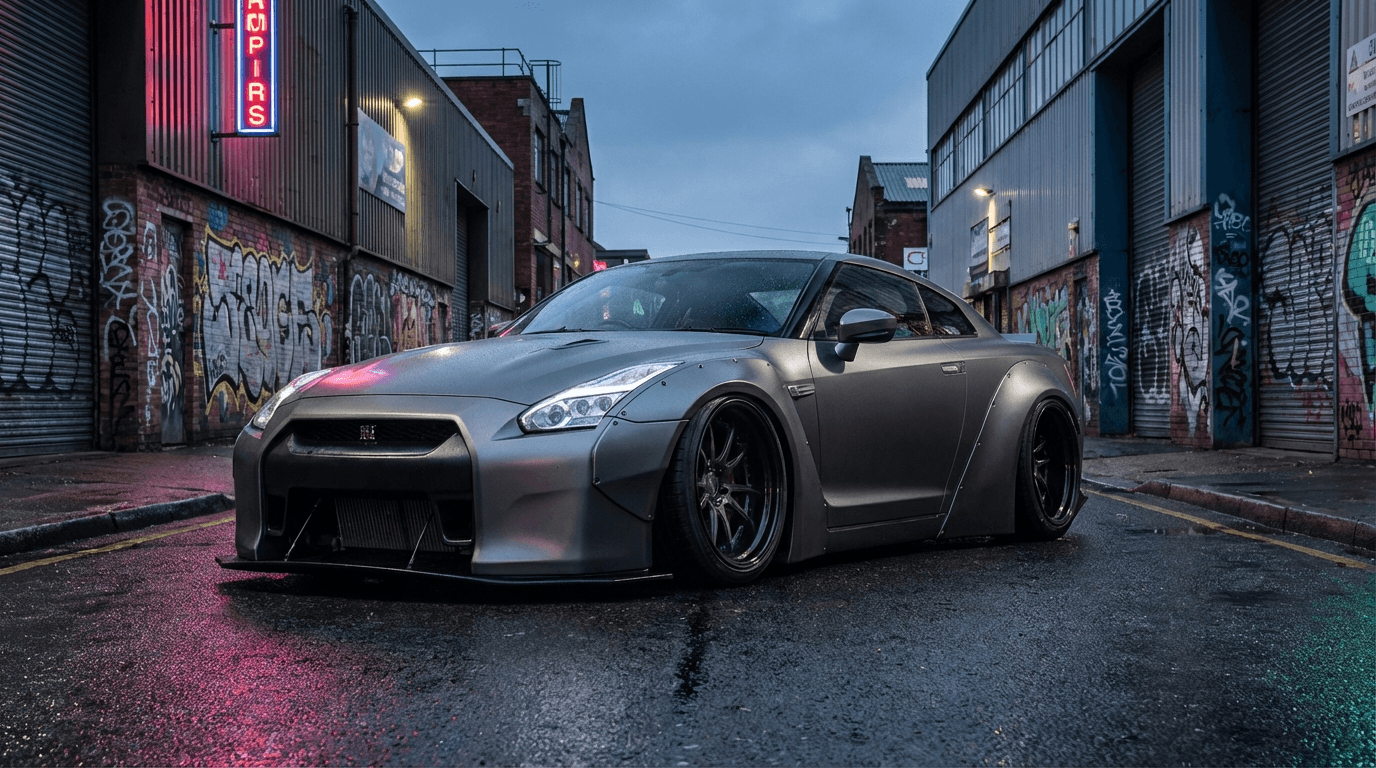
A widebody conversion is one of the most dramatic visual transformations you can make to a car. It changes the entire stance and proportions, allows wider wheels and tyres for more grip, and gives your car a presence that turns heads everywhere. But it is also one of the most involved modifications — do it right and the car looks incredible, do it wrong and it looks like a cheap afterthought.
This guide covers everything from bolt-on fender flares to full custom widebody builds, including materials, fitment considerations, and the wheel and tyre sizing that makes the whole thing work.
Why Go Widebody?
Performance Reasons
Wider fenders allow wider wheels and tyres. Wider tyres mean a larger contact patch, which means more grip — more cornering grip, more traction for acceleration, and shorter braking distances.
For serious track builds, the performance benefit of wider tyres is significant. Going from a 225mm tyre to a 275mm tyre can reduce lap times measurably. But to fit 275s, you need wider wheels, and wider wheels need wider fenders.
Aesthetic Reasons
A widebody car looks planted, aggressive, and purposeful. The wider stance fills out the wheel arches, eliminates the "wheel gap" look, and gives the car a lower, wider visual profile. It is the single most impactful visual modification — more dramatic than any other body kit or cosmetic change.
Types of Widebody Modifications
Bolt-On Fender Flares (Overfenders)
Bolt-on flares attach to the existing fender using hardware (rivets, bolts, or adhesive). The stock fender stays in place and the flare sits on top of or extends beyond it.
Pros:
- Reversible — remove the flares and you have a stock car (with bolt holes)
- Relatively affordable (RM 1,500 - RM 5,000 for a set)
- Can be installed in a day
- Many universal and car-specific options available
Cons:
- Gaps between the flare and body can look cheap if not fitted properly
- Hardware (rivets/bolts) visible on the surface
- Limited width extension (typically 20-50mm per side)
- Quality varies enormously between brands
Popular bolt-on fender flare styles:
- Rocket Bunny / Pandem — Japanese, riveted style with exposed fasteners. Iconic look.
- Liberty Walk — Japanese, aggressive riveted style. Very wide.
- Universal ABS flares — Generic flares in various widths. Budget option.
Cut-and-Weld Widebody
The stock fenders are physically cut away and new, wider fender panels are welded on. The result is seamless — it looks like the car was factory-built with wider fenders.
Pros:
- Seamless, factory-finish appearance
- Maximum width potential
- No visible hardware
- Best fit and finish when done properly
Cons:
- Irreversible — the original fenders are gone
- Expensive (RM 8,000 - RM 30,000+ including paint)
- Requires skilled bodywork and painting
- 1-3 weeks of workshop time
Pre-Made Full Widebody Kits
Complete kits that include wider front fenders, rear fenders, matching side skirts, and sometimes front and rear bumpers. These replace the factory panels entirely.
Pros:
- Designed as a complete aesthetic package
- Often include all mounting hardware and instructions
- Available in FRP, carbon fibre, or ABS
Cons:
- Expensive (RM 5,000 - RM 25,000 for the kit alone, before paint and fitment)
- Still require test fitting, prep, and professional paint
- Fitment can vary (especially with FRP kits)
Custom Fabrication
A skilled body shop builds entirely custom wider fenders from sheet metal or composite materials. This is the approach for one-off builds and cars without aftermarket widebody options.
Pros:
- Completely unique — your car is one of a kind
- Any width, any style is possible
- Perfect integration with your specific vision
Cons:
- Most expensive option (RM 15,000 - RM 50,000+)
- Requires a very skilled fabricator
- Long build time (weeks to months)
Materials
| Material | Weight | Durability | Finish Quality | Price |
|---|---|---|---|---|
| FRP (fibreglass) | Light | Moderate — can crack on impact | Good, needs careful paint prep | Mid-range |
| ABS plastic | Light | Good — flexes on impact | Moderate — can be hard to paint | Budget |
| Polyurethane (PU) | Medium | Excellent — absorbs impacts | Good, paints well | Mid to high |
| Carbon fibre (dry) | Very light | Good — strong but brittle on impact | Excellent — often shown unpainted | Premium |
| Sheet metal (steel) | Heavy | Excellent | Excellent — welds seamlessly | Varies |
For most builds, FRP is the most popular choice — it is light, relatively affordable, and can be finished to a very high standard. For the full story on carbon fibre parts specifically, check our dedicated guide.
Wheel and Tyre Sizing for Widebody
A widebody conversion without appropriately wider wheels and tyres looks wrong. The whole point is to fill those wider fenders with more rubber.
How to Size Your Wheels
- Determine your fender width increase — e.g., 30mm per side = 60mm total increase
- Choose wheel width — Match or slightly exceed the fender width. If you added 30mm per side, go 25-30mm wider per wheel.
- Set the offset — Wider wheels with the stock offset will poke too far. You typically need a lower offset (more positive) or spacers to get the correct flush fitment.
Common Widebody Wheel Sizing Examples
| Stock Wheel | Widebody Wheel | Width Added Per Side | Notes |
|---|---|---|---|
| 8" ET35 | 9.5" ET22 | ~30mm | Mild widebody |
| 8" ET35 | 10.5" ET15 | ~50mm | Moderate widebody |
| 8.5" ET35 | 11" ET5 | ~55mm | Aggressive widebody |
| 9" ET30 | 12" ET-5 | ~65mm | Very aggressive |
For a detailed guide on wheel sizing, offset, and fitment, read our complete wheels guide.
Tyre Considerations
Wider tyres improve grip but:
- Increase rolling resistance (slightly worse fuel consumption)
- Hydroplaning risk increases on wet Malaysian roads — tyre selection matters even more
- May require fender trimming or rolling even with the widebody flares
- Steering feel changes (heavier, more feedback)
Installation Considerations
What to Tell Your Workshop
- Your wheel and tyre specs — The widebody must be sized to accommodate them
- Whether you want riveted or seamless — Different construction approaches
- Paint matching expectations — Will you paint-match or go contrast (e.g., black flares on a coloured car)?
- Alignment changes — Wider track width affects alignment geometry. Plan for a professional wheel alignment after installation.
Common Issues with Widebody Installations
- Water ingress — Bolt holes and seams must be properly sealed. In Malaysia's monsoon rain, any gap will leak into the fender cavity.
- Paint cracking — FRP parts flex differently from metal body panels. Paint cracking at the joint is common if not properly prepped.
- Rubbing — Even with wider fenders, aggressive wheel fitment can rub at full lock or over bumps. Test thoroughly before daily driving.
- JPJ compliance — Significant widebody modifications may require PUSPAKOM inspection in Malaysia. Check our modification laws guide for details.
FAQ
How much does a widebody conversion cost in total?
Budget approximately:
- Bolt-on fender flares: RM 3,000 - RM 8,000 (kit + paint + install)
- Full widebody kit: RM 10,000 - RM 30,000 (kit + paint + install)
- Custom fabrication: RM 20,000 - RM 50,000+
- New wheels + tyres: RM 3,000 - RM 15,000 (depending on brand and size)
Can I do a widebody on any car?
You can put bolt-on fender flares on virtually any car using universal flares. Car-specific widebody kits are available for popular platforms (BMW 3 Series, Honda Civic, Nissan GTR, Toyota 86, Mazda MX-5, etc.). For less common cars, custom fabrication is the route.
Will a widebody affect my car's resale value?
It depends. A well-executed widebody on a desirable platform (GTR, M3, 86) with quality parts can maintain or even increase value to the right buyer. A poorly done widebody with cheap materials will hurt resale. The quality of execution is everything.
Do I need to cut my fenders?
For bolt-on flares, minimal cutting is usually needed — typically just the lip of the fender arch. For full widebody kits, more significant cutting or removal of factory metal is required. Cut-and-weld widebody by definition involves cutting.
Is a widebody just for looks?
Not at all. Many track cars run widebody specifically for the performance benefit of wider tyres. Time attack cars, drifting cars, and circuit racers use widebody for function first, aesthetics second.