15 Common Car Modification Mistakes and How to Avoid Them
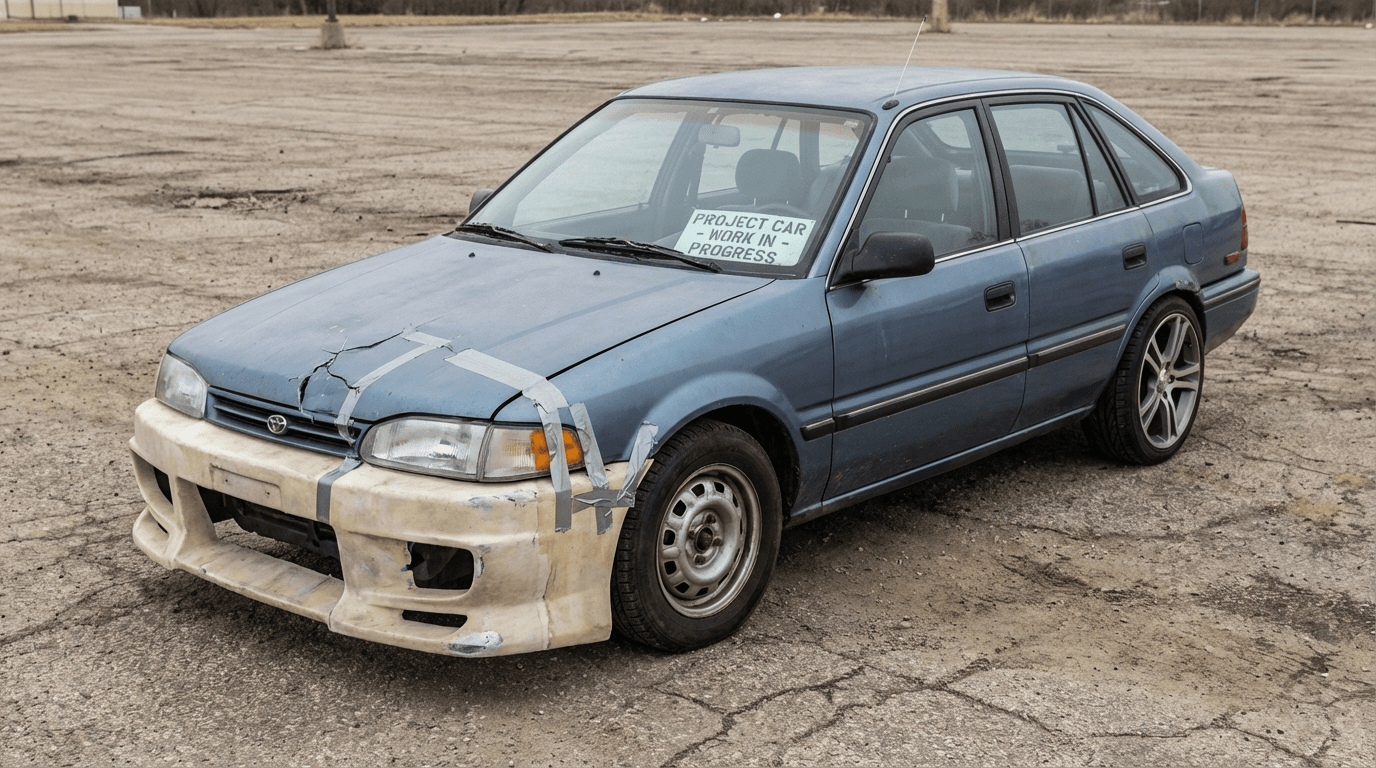
Everyone makes mistakes when modifying their car — it is part of the learning process. But some mistakes are expensive, dangerous, or set your build back significantly. Learning from other people's errors saves you time, money, and frustration.
Here are 15 of the most common car modification mistakes, why they happen, and how to avoid them.
1. Adding Power Without Upgrading Brakes
The mistake: Bolting on a turbo or getting a tune that adds 50-100 hp, then driving around on stock brake pads and fluid.
Why it matters: More power means higher speeds. Higher speeds mean dramatically more energy to dissipate when braking (braking energy scales with the square of speed — double the speed, four times the energy). Stock brake pads that were adequate at 150 hp can fade dangerously at 250 hp.
The fix: Budget for brake pad and fluid upgrades alongside any significant power increase. At minimum, upgrade to quality performance brake pads and DOT 4 or DOT 5.1 fluid. For more on brake upgrades, read our complete brake guide.
2. Cheap Coilovers That Ride Worse Than Stock
The mistake: Buying the cheapest coilovers available (RM 800-1,200) because "coilovers are coilovers."
Why it matters: Ultra-budget coilovers often have poor damper quality — harsh over bumps, underdamped in corners, inconsistent from side to side. Your car looks lower but handles worse than stock. Then you spend another RM 3,000 on proper coilovers six months later.
The fix: Save for at least mid-range coilovers (RM 2,500-4,000 from BC Racing, Bilstein, or similar). If budget is truly limited, quality lowering springs on stock dampers can actually ride and handle better than bottom-tier coilovers.
3. Skipping the ECU Tune After Hardware Changes
The mistake: Installing a downpipe, intake, and intercooler on a turbo car without getting the ECU tuned to match.
Why it matters: Hardware changes alter airflow, boost characteristics, and air-fuel ratios. Without a tune, the ECU is working with outdated calibrations. Best case: you leave power on the table. Worst case: the engine runs lean under boost and detonates.
The fix: Always tune after significant hardware changes. If you are planning multiple modifications, do them all before tuning to avoid paying for multiple tune revisions. Learn more about ECU tuning.
4. Wrong Modification Order
The mistake: Installing a body kit and wrapping the car before addressing tyres, brakes, and suspension.
Why it matters: Aesthetic mods do not make the car faster, safer, or more enjoyable to drive. If you spend your entire budget on looks, you have a good-looking car that handles and stops like a stock car — or worse, if the aesthetics mods add weight.
The fix: Follow the recommended priority: tyres → brakes → tune → suspension → exhaust → aesthetics. Our modification budget guide covers the ideal order in detail.
5. Not Declaring Modifications to Insurance
The mistake: Ignoring insurance declaration because "they will never know."
Why it matters: When you make a claim, the adjuster inspects the car. Undeclared modifications give the insurer grounds to reduce or reject your claim. You could lose tens of thousands of ringgit.
The fix: Declare all significant modifications and consider agreed value insurance. Read our car insurance and modifications guide for the full breakdown.
6. Oversized Exhaust on a Low-Power Car
The mistake: Installing a 3-inch or 4-inch exhaust on a stock 120 hp car.
Why it matters: Exhaust pipe diameter needs to match engine output. Too large and exhaust gas velocity drops, killing the scavenging effect. You lose low-end torque, the sound becomes hollow and tinny, and you gain virtually no power. A properly sized 2-2.5 inch exhaust outperforms a 3-inch on a low-power engine.
The fix: Match exhaust diameter to power output. Under 200 hp: 2-2.25 inches. 200-350 hp: 2.5 inches. 350-500 hp: 3 inches. Our exhaust guide has detailed sizing recommendations.
7. Lowering Too Much for Daily Driving
The mistake: Slamming the car on its bump stops because the look is cool.
Why it matters: Extreme lowering means no suspension travel — every bump and pothole sends a jarring impact through the chassis. Scraping over speed bumps, damaging the undercarriage on every driveway, and destroying wheels on Malaysian road imperfections. The car looks great parked but is miserable to drive.
The fix: Aim for a practical drop — 25-40mm for most daily drivers. Save the slammed look for shows with air suspension that you can raise for driving. Always consider the wheel alignment implications of lowering.
8. Mixing Performance Levels Between Mods
The mistake: Putting RM 15,000 coilovers on a car with stock tyres, or installing a massive turbo with a stock clutch.
Why it matters: Your car's performance is limited by its weakest link. Premium coilovers cannot compensate for worn-out budget tyres. A big turbo that overwhelms the stock clutch on every launch is useless. Modifications need to be balanced.
The fix: Ensure supporting modifications match your primary upgrades. Power mods need clutch, brakes, and fuel system to match. Suspension mods need tyres and alignment to match.
9. Not Getting a Wheel Alignment After Suspension Changes
The mistake: Installing coilovers or lowering springs and driving away without an alignment.
Why it matters: Changing ride height alters suspension geometry — camber, toe, and caster all change. Without an alignment, you will eat through tyres unevenly (sometimes within 5,000-10,000 km), and the car's handling will be worse, not better.
The fix: Always get a professional alignment after any suspension height change. Always.
10. Buying Based on Brand Hype, Not Research
The mistake: Choosing parts because they are popular on Instagram or recommended by someone who does not have the same car.
Why it matters: What works on one car does not necessarily work on another. Spring rates, exhaust diameters, turbo sizing, and even brake pad compounds are car-specific. The "best" coilover brand for a BMW might be wrong for a Honda.
The fix: Research your specific car. Read model-specific forums, watch comparison videos for your platform, and talk to people who have your car with the modifications you are considering.
11. Ignoring Maintenance on a Modified Car
The mistake: Spending RM 20,000 on modifications but skipping oil changes and ignoring worn bushings.
Why it matters: Modifications increase stress on every component. A tuned engine needs more frequent oil changes. Coilovers need servicing. Performance brake pads wear faster. If you neglect maintenance, your expensive modifications deteriorate or fail. Our maintenance guide for modified cars covers everything you need to stay on top of.
The fix: Budget for increased maintenance costs — typically RM 1,500-3,000 extra per year for a moderately modified car.
12. Stacking Tunes Without Supporting Mods
The mistake: Going from stock to Stage 1 to Stage 2 to "Stage 3" through tune alone, without adding supporting hardware.
Why it matters: Each tune level assumes certain hardware is present. A Stage 2 tune assumes an upgraded intercooler and downpipe. Running a Stage 2 tune on stock hardware means the tune cannot deliver its full potential and may be running at the safety limits of stock components.
The fix: Understand what each tune level requires and install the hardware before or alongside the tune.
13. Installing Parts Without Test Fitting First
The mistake: Painting a body kit, then discovering it does not fit properly.
Why it matters: Aftermarket body parts — especially fibreglass — often need test fitting, trimming, and adjustment before paint. Painting first means you either accept a poor fit or repaint after adjustments (which is expensive).
The fix: Always dry-fit body kit components before committing to paint.
14. Choosing the Wrong Workshop
The mistake: Going to the cheapest workshop or one that does not specialise in your type of car or modification.
Why it matters: A workshop that does not understand your car can make costly mistakes — wrong parts, incorrect installation, undertightened critical bolts, or damage during the job. Our guide to choosing a workshop in Malaysia covers what to look for and red flags to watch out for.
The fix: Ask for referrals from other owners of your car. Specialist workshops may charge more but the quality of work justifies it.
15. Not Having a Clear Build Plan
The mistake: Modifying impulsively — buying whatever is on sale, changing direction mid-build, and ending up with an incoherent mix of parts that do not work together.
Why it matters: Without a plan, you waste money on parts that do not serve your final goals. You buy a cat-back exhaust, then decide to go turbo and need a different exhaust system. You install lowering springs, then buy coilovers six months later. Every unplanned change costs double — buying, installing, then selling and replacing.
The fix: Before buying anything, define your goals: What do you want the car to be? Daily driver? Track car? Show car? Then build a modification plan that serves that goal, in the right order, at a pace your budget can sustain.
The Bottom Line
Every experienced enthusiast has made at least a few of these mistakes. The key is learning from them — preferably from someone else's experience rather than your own wallet. Plan your build, research your parts, follow the right modification order, and always remember: a well-maintained car with a few quality modifications will always be more enjoyable than a neglected car buried in cheap parts.
If you are just starting out, our beginner's guide to car modification is the best place to build a strong foundation.
FAQ
What is the single worst modification mistake?
Increasing power significantly without upgrading brakes. It is a genuine safety issue — you can always slow down and baby a poorly chosen cosmetic mod, but you cannot stop a fast car with faded brakes.
How do I know if I am buying quality parts?
Research the brand, read long-term reviews (not just initial impressions), check what professional race teams and tuners use, and be wary of anything priced significantly below the market average.
Is it ever worth buying cheap parts?
For some non-critical items — shift knobs, cosmetic trim, interior accessories — budget options can be fine. For anything that affects safety (brakes, suspension, tyres) or engine health (turbo parts, fuel system), always buy quality.