Car Insurance and Modifications in Malaysia: What You Need to Know
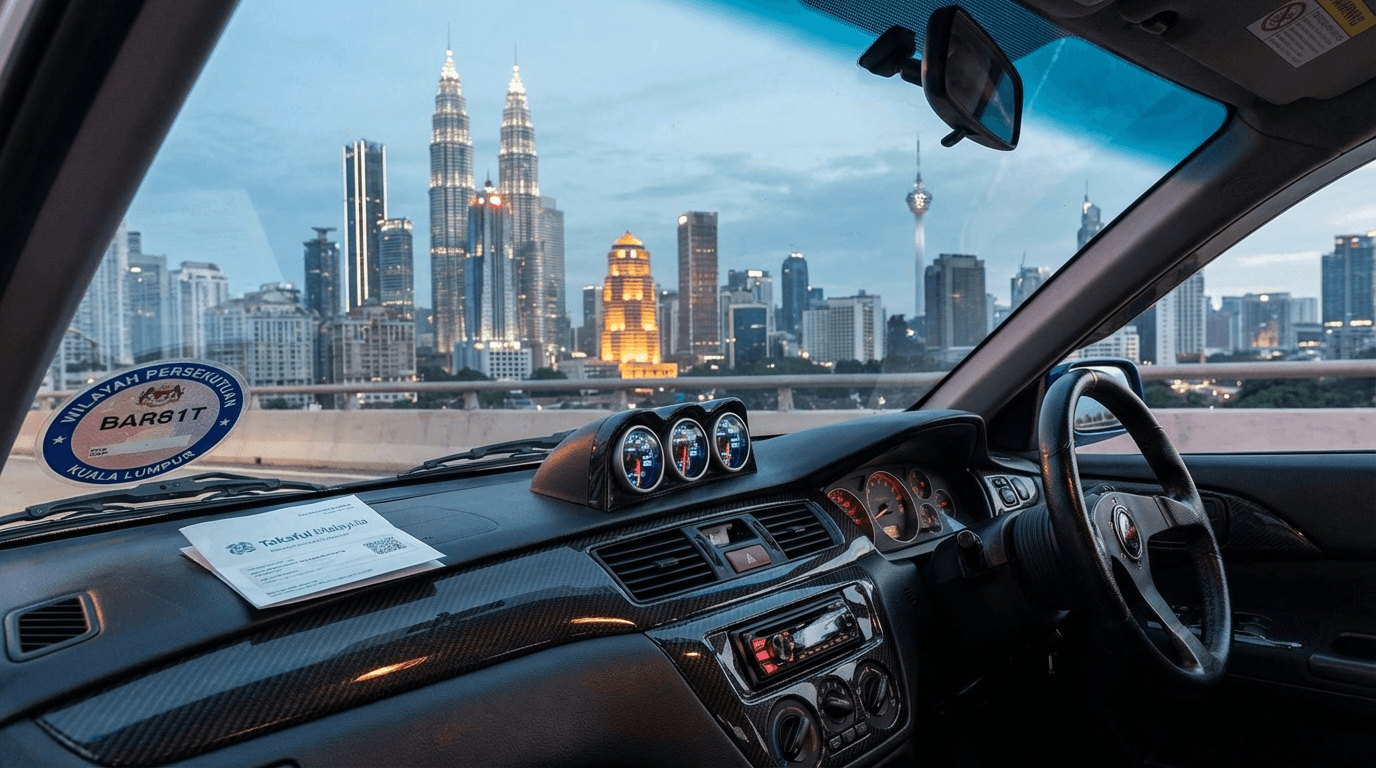
Modifying your car is exciting — but the insurance side of things is something most enthusiasts either ignore or get wrong. In Malaysia, failing to declare modifications to your insurer can result in voided claims, which means you pay for everything out of pocket after an accident. Even worse, you might not find out until you actually need to make a claim.
This guide explains how car insurance works with modifications in Malaysia, what you need to declare, how it affects your premium, and how to protect yourself properly.
How Car Insurance Works in Malaysia
Before diving into modifications, a quick overview of Malaysian car insurance:
Types of Cover
| Type | What It Covers | Modifications Relevant? |
|---|---|---|
| Third-Party Only | Damage you cause to other people/property | Yes — undeclared mods can still void your policy |
| Third-Party, Fire & Theft | Above + fire and theft of your car | Yes — declared value matters for theft |
| Comprehensive | All of the above + damage to your own car | Most relevant — your modifications affect your car's value |
Most modified car owners should have comprehensive coverage because modifications increase your car's value beyond the standard market rate. If your car is stolen or totalled and you only have third-party cover, you get nothing for the modifications.
Agreed Value vs Market Value
Market value — The insurer pays what a similar stock car is worth at the time of the claim. Your modifications are not covered unless declared. If you spent RM 30,000 on mods but did not declare them, you get RM 0 for those modifications.
Agreed value — You and the insurer agree on a specific value for the car (including modifications) when you take out the policy. This is the amount you receive if the car is totalled or stolen. Higher premium, but full protection.
For modified cars, agreed value is strongly recommended. It is the only way to ensure your modifications are financially protected.
What Modifications Must Be Declared?
The short answer: all of them. Any modification that changes the car from its factory specification should be declared to your insurer. However, in practice, some modifications are more critical to declare than others.
Must Declare (High Risk if Undeclared)
- Engine modifications — Tune, turbo upgrade/addition, supercharger, engine swap
- Suspension changes — Coilovers, lowering, air suspension
- Exhaust system — Full system, headers, downpipe
- Wheel and tyre changes — Different sizes, widths, or specifications from factory
- Body modifications — Widebody, roll cage, structural changes
- Nitrous oxide (NOS)
Should Declare (Medium Risk)
- Brake upgrades — Big brake kits, upgraded pads and rotors
- Interior changes — Racing seats, harnesses, steering wheel, roll cage
- Air intake upgrades
- Intercooler upgrades
- Lighting modifications
Low Risk (But Best Practice to Declare)
- Cosmetic changes — Wrap, tint, decals, badges
- Audio upgrades — If significantly valuable (RM 2,000+)
- Minor accessories — Dash cam, phone mount, floor mats
Why Declaration Matters
When you make an insurance claim, the insurer sends an adjuster to inspect your car. If they find undeclared modifications, they have grounds to:
- Reduce the payout — Pay only for the stock car value
- Reject the claim entirely — Argue that undeclared modifications constitute a material misrepresentation of the risk
- Void the policy — Cancel your insurance retroactively
Scenario: You have a modified car worth RM 120,000 (RM 80,000 car + RM 40,000 in mods). You did not declare the mods. Your car is totalled. The insurer pays RM 80,000 for the stock car — your RM 40,000 in mods is gone.
Worse scenario: The insurer argues your undeclared engine modifications contributed to the accident (e.g., more power led to loss of control). They reject the claim entirely. You get RM 0.
How Modifications Affect Your Premium
Declaring modifications will increase your insurance premium. How much depends on the type and extent of modifications.
Typical Premium Impact
| Modification Type | Premium Increase | Notes |
|---|---|---|
| Cosmetic only (wrap, tint, body kit) | 0-10% | Minimal impact |
| Suspension (coilovers, lowering) | 5-15% | Moderate |
| Exhaust system | 5-10% | Low risk modification |
| Wheels + tyres (upgraded) | 5-15% | Depends on value |
| ECU tune (Stage 1) | 10-20% | Performance increase raises risk profile |
| Turbo upgrade / big power mods | 15-30% | Significant performance increase |
| Full build (engine + suspension + brakes + body) | 20-50%+ | Heavily modified = higher risk in insurer's eyes |
How to Minimise Premium Increases
- Shop around — Different insurers have different attitudes toward modifications. Some are enthusiast-friendly, others are not.
- Get an agreed value — This fixes your payout amount and can sometimes result in lower premiums than trying to cover each mod individually.
- Provide documentation — Receipts, professional installation records, and photos of modifications help the insurer assess risk fairly.
- Highlight safety mods — If you have upgraded brakes, a roll cage, or safety harnesses, emphasise these — they reduce accident severity, which insurers like.
- Maintain a clean driving record — Your NCD (No Claims Discount) is the biggest factor in your premium. A clean record offsets modification surcharges.
Insurers That Cover Modified Cars in Malaysia
Not all insurers are willing to cover heavily modified cars. Some will refuse coverage entirely, while others specialise in enthusiast vehicles.
Tips for Finding Coverage
- Talk to a broker — An insurance broker (not a direct insurer) can shop across multiple companies to find one that accepts your modifications
- Specialist insurers — Some insurers cater specifically to enthusiast and classic cars
- Car club connections — Malaysian car clubs and communities often have recommended brokers who understand modifications
- Be honest — Trying to hide modifications will only hurt you at claim time
Making a Claim with a Modified Car
What to Do After an Accident
- Document everything — Photos of all damage, the scene, other vehicles involved
- Do not admit fault — Let the insurer and police determine liability
- File a police report — Required for insurance claims in Malaysia
- Contact your insurer promptly — Report the claim within the timeframe specified in your policy
- Provide modification records — If you declared your mods, provide receipts and documentation to support the claim value
Common Claim Issues for Modified Cars
- Workshop choice — Your insurer may insist on their approved panel workshop, which may not be experienced with modified cars. Negotiate to use a specialist workshop if possible.
- Parts replacement — The insurer may want to replace damaged aftermarket parts with stock equivalents. If your modifications are declared and valued in your policy, push for like-for-like replacement.
- Write-off threshold — Modified cars have a higher value, which means the repair-vs-write-off threshold changes. An insurer may write off a stock car at RM 10,000 in damage, but your agreed value policy might justify repair at a higher amount.
JPJ and PUSPAKOM Considerations
In Malaysia, car modifications also interact with JPJ (Road Transport Department) regulations. Some modifications require PUSPAKOM inspection and JPJ approval.
Modifications that are not JPJ-approved can give your insurer additional grounds to reject a claim. If the modification is illegal (e.g., non-compliant tint darkness, excessive ride height change), the insurer can argue you were operating the vehicle outside legal parameters.
For a detailed breakdown of what is legal and what is not, read our complete guide to Malaysian car modification laws.
Practical Tips for Modified Car Owners
- Keep all receipts — Every part, every installation. Store digital copies in the cloud.
- Photograph your car — Take dated photos showing all modifications. Update after each new mod.
- Update your insurer — Notify them when you add significant modifications. Do not wait until renewal.
- Get agreed value — The single best decision for a modified car owner.
- Read your policy — Understand the exclusions. Ask specifically about modifications.
- Join a car club — Access to recommended brokers and shared knowledge about insurance experiences.
- Consider a dashcam — Video evidence protects you in disputed claims, regardless of modifications.
FAQ
Do I have to declare a cat-back exhaust?
Technically yes, you should declare all modifications. In practice, a bolt-on exhaust is low-risk and most insurers will not significantly increase your premium for it. But if you are in an accident and the insurer discovers undeclared modifications of any kind, they have leverage.
Will my NCD (No Claims Discount) be affected by declaring mods?
No. NCD is based solely on your claims history, not on what modifications you have. Declaring modifications does not reset or reduce your NCD.
Can an insurer refuse to cover my modified car?
Yes. Insurers can decline coverage based on the modification level or type. If one insurer refuses, try others or use a broker who specialises in modified vehicles.
Do I need separate insurance for track days?
Standard road insurance typically excludes track use. You need separate track day insurance or an event policy. Some track day organisers in Malaysia include basic coverage in the entry fee — always check.
Is window tint a modification I need to declare?
Factory-darkness tint generally does not need declaring. Aftermarket tint beyond legal limits (which is common in Malaysia) technically should be declared, though most insurers do not increase premiums for tint within reasonable levels.
What if my car is stolen with undeclared modifications?
If the modifications are not declared, the insurer will pay the market value of the stock car only. All the money you spent on modifications is lost. This is the strongest argument for declaring and getting agreed value.