Launch Control, Anti-Lag, and Two-Step: How They Work and What You Need
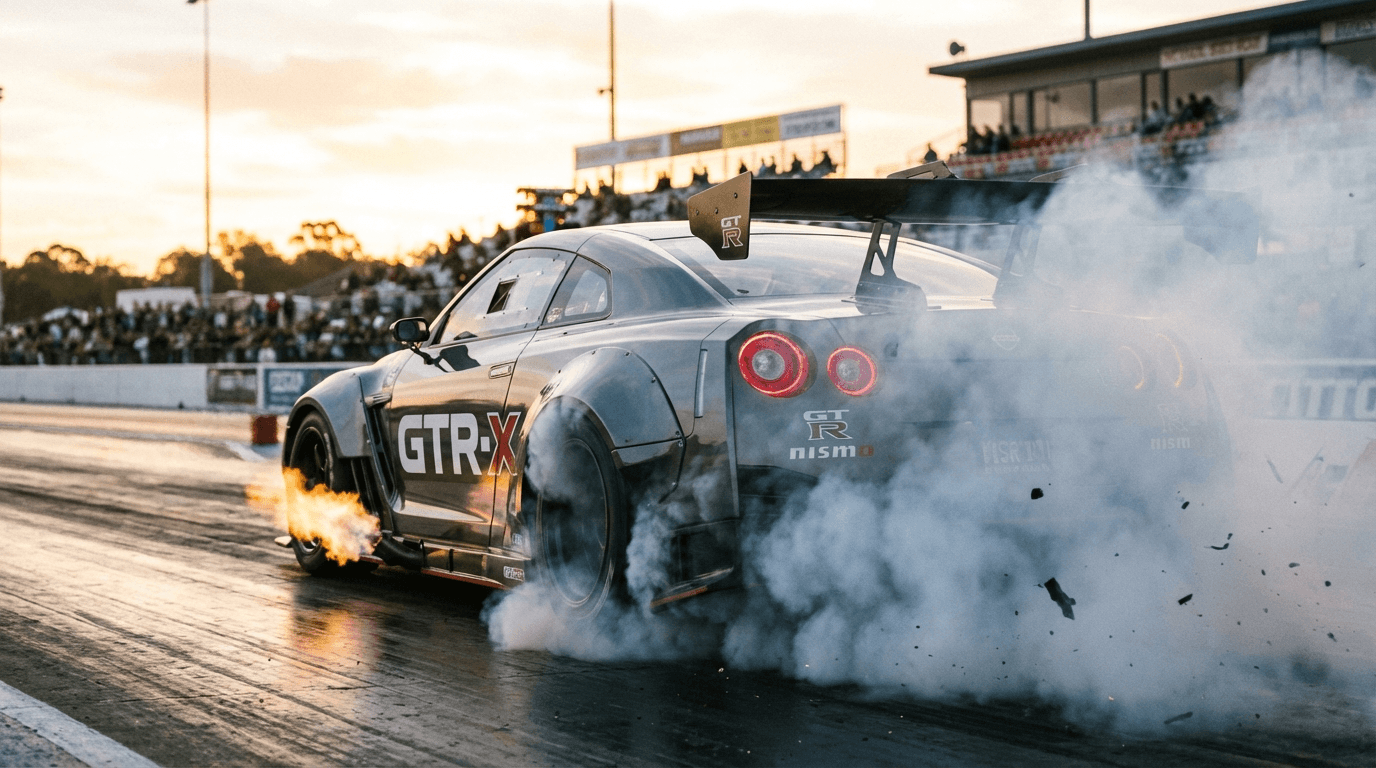
The dramatic flames, pops, and bangs from the exhaust of a car sitting on the start line with the engine revving — that is launch control, anti-lag, or two-step in action. These systems are designed to optimise standing starts and keep turbochargers spooled, but they are often confused with each other. They are actually three distinct systems that work differently and serve different purposes.
This guide explains how each one works, what the differences are, and which ones make sense for your modified car.
Launch Control
What It Does
Launch control is an ECU function that limits engine RPM at a specific point while the car is stationary, allowing you to build boost (on turbo cars) or reach the optimal launch RPM (on all cars) before releasing the clutch or brake. The goal is a consistent, optimised standing start.
How It Works
- You stop the car, engage first gear, and floor the throttle
- The ECU holds the engine at a pre-set RPM (the "launch RPM") by cutting ignition or fuel on some cylinders
- On turbo cars, the turbo spools up because exhaust gases are still flowing, building boost pressure
- You release the clutch or brake, and the car launches with full power and pre-built boost
Factory Launch Control
Many modern performance cars come with launch control from the factory:
- BMW M cars — Hold brake + floor throttle (automatic), or set to MDM/DSC off and use clutch (manual)
- Porsche — Sport Chrono package includes launch control
- Volkswagen/Audi (DSG/S-tronic) — Launch control via Sport mode or driving mode selector
- Nissan GT-R — Built-in, user-selectable launch RPM
- AMG cars — AMG Drive Unit with Race Start function
Aftermarket Launch Control
If your car does not have factory launch control, it can be added through an ECU tune. Most aftermarket tunes for turbo cars include a launch control function with a user-selectable RPM limit.
Requirements:
- ECU tune that supports launch control
- Strong clutch (launch control puts enormous stress on the clutch)
- Strong drivetrain (axles, differential, transmission)
For more on clutch requirements, see our clutch and flywheel guide.
Two-Step Rev Limiter
What It Does
A two-step rev limiter creates two RPM limits: one for launch (lower) and one for driving (higher, the normal redline). When stationary with the clutch in, the engine hits the lower "launch" limiter. Once moving, the full redline applies.
How It Differs from Launch Control
Launch control is a broader term that includes boost-building and traction management. A two-step is specifically the rev limiter mechanism that holds RPM at the launch point. Many people use the terms interchangeably, but technically:
- Two-step = the rev limiter that holds RPM at launch
- Launch control = the complete system including two-step + boost control + sometimes traction control
The Dramatic Effect
The pops, bangs, and flames you see from cars on a two-step are caused by the ignition cut method. When the ECU limits RPM by cutting ignition (but still injecting fuel), unburnt fuel enters the exhaust and ignites. The result is loud pops and visible flames from the exhaust.
This is dramatic and entertaining, but it is also:
- Hard on the exhaust system (extreme heat)
- Hard on the turbo (uncontrolled exhaust energy)
- Hard on the catalytic converter (if equipped — can overheat and destroy it)
- Illegal in many areas (noise and fire risk)
Types of RPM Limiting
| Method | How It Works | Effect |
|---|---|---|
| Ignition cut | Cuts spark on selected cylinders | Dramatic pops and flames, harsh |
| Fuel cut | Cuts fuel to selected cylinders | Cleaner, less dramatic, smoother |
| Combined | Alternates between ignition and fuel cut | Balanced approach |
| Throttle cut | ECU closes throttle (drive-by-wire) | Smoothest, no drama, factory method |
Anti-Lag System (ALS)
What It Does
Anti-lag keeps the turbocharger spinning at high speed even when you are off the throttle — during gear changes, braking into corners, or any situation where you lift off the accelerator. Without anti-lag, the turbo slows down when you lift off, and you experience turbo lag when you get back on the throttle.
How It Works
Anti-lag injects fuel and air into the exhaust manifold (downstream of the cylinders, upstream of the turbo). This mixture ignites in the exhaust housing, keeping hot gases flowing through the turbo even when the engine is not producing exhaust through normal combustion.
There are several methods:
Retarded ignition timing — The ECU retards ignition timing dramatically (sometimes firing after the exhaust valve opens), so combustion happens partially in the exhaust manifold. This keeps exhaust energy flowing to the turbo.
Secondary air injection — Fresh air is injected into the exhaust manifold via a valve. When this air meets the hot exhaust gases and unburnt fuel, it combusts in the manifold, driving the turbo.
Misfiring ALS — The ECU deliberately misfires cylinders, sending unburnt fuel-air mixture into the exhaust where it ignites. This is the most aggressive method and produces the loudest pops and bangs.
Why Anti-Lag Is Mostly for Motorsport
Anti-lag is extremely effective but extremely destructive:
- Turbo life is dramatically shortened — The uncontrolled combustion in the exhaust housing subjects the turbo to extreme temperatures and pressure spikes
- Exhaust manifold stress — Combustion where it should not be happening creates thermal shock
- Catalytic converter destruction — Anti-lag will destroy a catalytic converter quickly
- Noise — Extraordinarily loud, impossible to use on public roads
- Fire risk — Flames from the exhaust are a real fire hazard
In rally and motorsport, turbos and exhaust components are treated as consumables — they are rebuilt or replaced after every event. For a street car, anti-lag will dramatically shorten the life of expensive components.
Street-Friendly Alternatives
Modern ECU tunes offer "mild anti-lag" or "burble tunes" that produce pops and bangs on overrun without the extreme turbo-holding effects of true anti-lag. These are less destructive but still harder on exhaust components than a standard tune.
Some modern cars achieve a similar effect through aggressive overrun fuelling strategies that are calibrated to be safe for the components — BMW's "Sport+ exhaust" pops are an example.
Crackle Tunes and Pop-and-Bang Maps
These are ECU tune features that make the exhaust pop and crackle on deceleration. They are often confused with anti-lag but are fundamentally different:
- Anti-lag holds the turbo spinning (functional purpose)
- Crackle tune makes noise on overrun (purely aesthetic/sound)
Crackle tunes work by injecting extra fuel on deceleration, which ignites in the hot exhaust system. The intensity can range from subtle pops to aggressive gunfire-like cracking.
Considerations:
- Additional stress on the exhaust system and catalytic converter
- Can be annoying in daily driving (pops every time you lift off the throttle)
- May attract unwanted attention from authorities
- Some people love it, some find it obnoxious — personal preference
What Your Modified Car Can Actually Get
| Feature | How to Get It | Requirements | Daily Usable? |
|---|---|---|---|
| Launch control | ECU tune | Tune, strong clutch, turbo car benefits most | Yes (but hard on clutch) |
| Two-step | ECU tune | Tune | Yes (but noisy) |
| Crackle/pop tune | ECU tune | Tune, ideally aftermarket exhaust | Yes (but potentially annoying) |
| Mild anti-lag | Advanced ECU tune | Tune, turbo car, upgraded turbo recommended | Somewhat (increased component wear) |
| Full anti-lag | Standalone ECU + hardware | Standalone ECU, wastegate plumbing, turbo car | No (motorsport only) |
FAQ
Will launch control break my clutch?
Launch control puts extreme stress on the clutch because you are side-loading it with full engine torque and turbo boost. Stock clutches on high-power cars can slip or burn on aggressive launches. If you plan to use launch control regularly, a clutch upgrade is strongly recommended.
Can I add anti-lag to my stock turbo car?
You can add mild crackle/pop tunes through ECU tuning, but true anti-lag requires a standalone ECU and is not recommended for street cars. The component wear is extreme and the noise is unacceptable for public roads.
Are crackle tunes bad for my car?
Mild crackle tunes from reputable tuners are generally safe for the engine. They do add extra stress to the exhaust system and catalytic converter. Very aggressive crackle tunes can overheat and destroy the catalytic converter — tyre selection may seem unrelated, but many enthusiasts prioritise sound modifications over grip modifications, which is backwards from a performance standpoint.
What RPM should I set launch control to?
This depends on your car, turbo, and clutch. A tuner will determine the optimal launch RPM based on your setup — typically 3,000-5,000 RPM for turbocharged cars, high enough for the turbo to build boost but low enough to protect the drivetrain.
Is launch control legal in Malaysia?
Launch control itself is not illegal — it is an ECU function. However, using it on public roads creates excessive noise and can be considered reckless driving. It is designed for controlled environments like drag strips and track days.