Heat Management and Cooling for Modified Cars: The Complete Guide
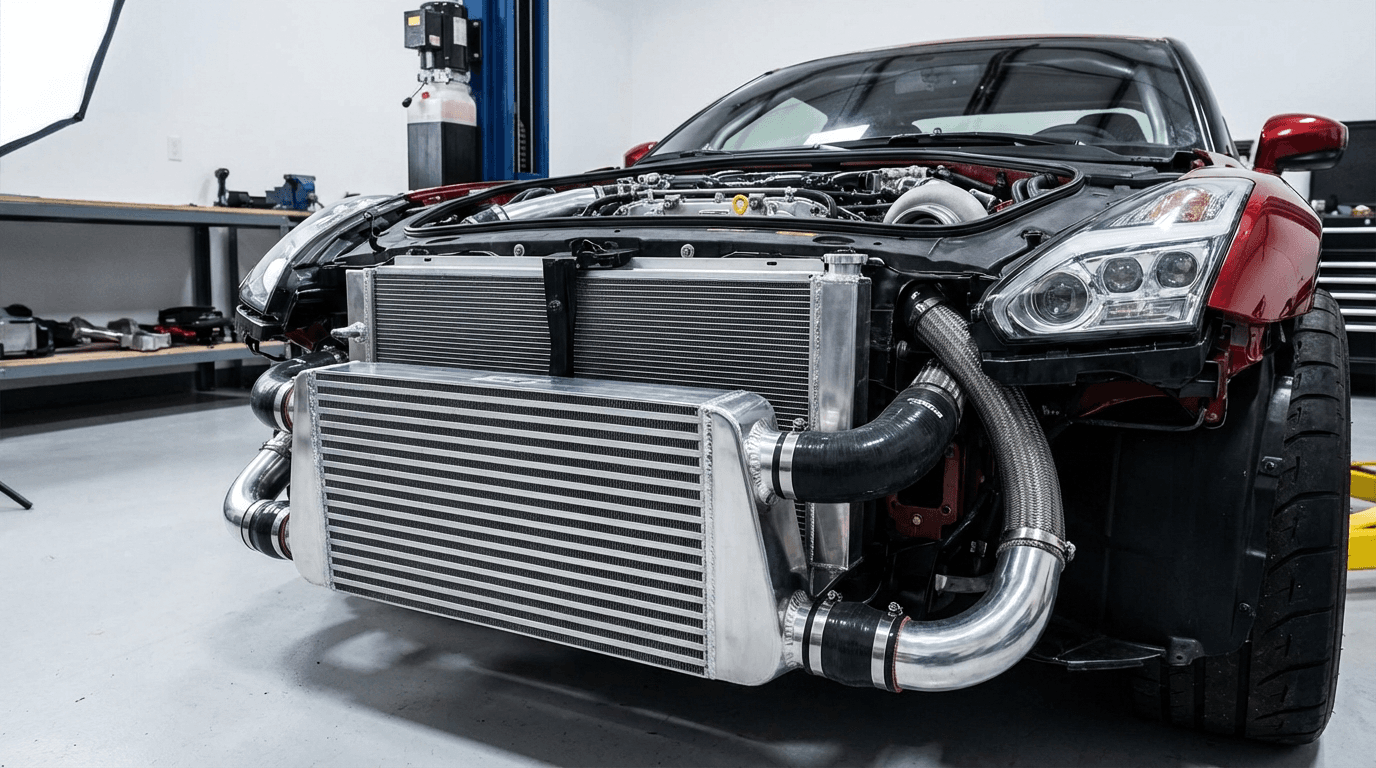
Heat is the enemy of performance. Every modification that increases power also increases heat — more combustion, more exhaust energy, more friction, more stress on every component. In a temperate climate, stock cooling systems can often handle moderate modifications. In Malaysia, where ambient temperatures regularly exceed 35°C and traffic jams can last hours, heat management is not optional — it is essential.
This guide covers every aspect of keeping your modified engine, transmission, and brakes cool, with specific attention to the challenges of Malaysia's tropical climate.
Why Modified Cars Run Hotter
More Power = More Heat
A stock engine converts about 30-35% of fuel energy into mechanical power. The rest becomes heat — roughly 30% exits through the exhaust, 30% is absorbed by the cooling system, and the remainder radiates from the engine block and components.
When you increase power through tuning, more fuel is being burned, which creates proportionally more heat across all three channels. A 30% power increase means roughly 30% more heat for the cooling system to manage.
Turbo Multiplier
Turbocharged engines have an additional heat challenge. Compressing intake air generates heat (that is why you need an intercooler). The turbo itself generates enormous heat — turbo housing temperatures can exceed 800°C. More boost means more compression heat and more exhaust energy driving the turbo.
Malaysia's Climate Factor
European and Japanese cooling systems are designed for average ambient temperatures of 10-25°C. In Malaysia:
- Average ambient: 30-35°C
- Peak ambient: 38-40°C
- Radiant heat from road surface: adds 5-10°C to under-car temperatures
- Traffic jams: Extended low-speed operation with minimal airflow through the radiator
This means your cooling system starts with a 15-20°C disadvantage compared to the conditions it was designed for.
Coolant System Upgrades
Radiator Upgrade
The radiator is the primary heat exchanger for your engine. Stock radiators are designed to be adequate, not excellent — they are the minimum size that works for the stock engine in normal conditions.
When to upgrade:
- Coolant temperatures regularly exceeding 100°C in normal driving
- Temperatures spiking above 105°C in traffic or spirited driving
- After any significant power increase (Stage 2+)
- Track use
Upgrade options:
| Type | Description | Price Range |
|---|---|---|
| Thicker stock-size radiator | Same dimensions, more rows of tubes | RM 400 - RM 1,200 |
| Aluminium performance radiator | Full aluminium construction, often thicker | RM 800 - RM 3,000 |
| Half-size radiator + electric fans | For track builds with weight priority | RM 1,500 - RM 4,000 |
Aluminium vs copper/brass: Aluminium radiators are lighter and dissipate heat faster. Copper/brass radiators hold more heat (higher thermal mass) which can be beneficial in stop-and-go traffic. For most performance applications, aluminium is preferred.
Coolant Choice
Do not use plain water. Even in Malaysia where freezing is not a concern, coolant provides:
- Higher boiling point than water (especially with pressure)
- Corrosion inhibitors that protect the aluminium, steel, and rubber in the cooling system
- Water pump lubrication
- Anti-cavitation properties
Recommended coolant mix: 50/50 coolant and distilled water for street cars. Some track builds use waterless coolant (Evans) which has a higher boiling point but lower heat transfer efficiency.
Thermostat
A lower-temperature thermostat opens earlier, allowing coolant to circulate through the radiator sooner. Stock thermostats typically open at 82-90°C. A performance thermostat opens at 68-76°C.
When it helps: If your engine takes too long to enter the safe operating range and then overshoots. In Malaysia's climate, a lower thermostat can keep average temperatures 5-10°C lower.
Price: RM 50 - RM 200
Electric Fan Upgrade
Factory electric fans are often undersized. Upgrading to larger fans or adding a secondary fan improves airflow through the radiator, especially at low speeds and idle (traffic jams).
Key spec: CFM (cubic feet per minute). More CFM = more airflow. A factory fan might push 1,500-2,000 CFM. A performance fan can push 2,500-3,500 CFM.
Price: RM 200 - RM 800 per fan
Oil Cooling
As we covered in our engine oil guide, oil temperature critically affects its protective properties. Oil serves double duty on turbocharged engines — it both lubricates and cools the turbo bearings.
Oil Cooler Types
Air-to-oil cooler — A small radiator-like heat exchanger mounted in the front of the car (usually behind the bumper). Ambient air flows through it, cooling the oil.
- Pros: Effective, passive (no additional power draw)
- Cons: Requires routing oil lines to the front of the car, adds weight and complexity
- Price: RM 500 - RM 2,000 (kit with thermostat, lines, and fittings)
Plate-type (stacked plate) — A compact heat exchanger that uses engine coolant to regulate oil temperature. Mounted near the engine.
- Pros: Compact, uses existing coolant system, warms oil faster in cold conditions
- Cons: Limited by coolant temperature (if coolant is hot, oil cooling capacity drops)
- Price: RM 300 - RM 1,000
Thermostat: Critical for Oil Coolers
A thermostatic oil cooler sandwich plate ensures oil only flows through the cooler once it reaches operating temperature (typically 80°C). Without a thermostat, the oil is cooled from startup, which delays reaching operating temperature and can cause increased wear from running on cold oil.
Transmission and Differential Cooling
Often overlooked, transmission and differential fluid also suffers from heat on modified cars — especially track cars and cars with more power going through the drivetrain.
Transmission Cooler
Automatic transmissions generate significant heat, especially with increased power. A transmission cooler is a small heat exchanger in the ATF cooling circuit.
When you need one:
- Modified automatic/DCT with increased power
- Track use with any automatic transmission
- Towing with a modified car
Price: RM 300 - RM 1,000
Differential Cooler
Differentials, especially limited-slip differentials (LSDs), generate heat under sustained hard driving. Track cars and drift cars particularly benefit from differential cooling. For more on differentials, see our complete differential guide.
Heat Insulation and Management
Sometimes the goal is not to remove heat but to keep it away from sensitive components.
Exhaust Heat Wrap
Heat wrap (also called exhaust wrap or header wrap) is a fibreglass or ceramic fabric wrapped around exhaust manifolds, headers, and downpipes. It keeps exhaust heat inside the pipes rather than radiating into the engine bay.
Benefits:
- Reduces under-bonnet temperatures by 20-40°C
- Keeps heat in the exhaust, which maintains exhaust gas velocity (better scavenging)
- Protects nearby components (intake, wiring, fuel lines) from heat
Drawbacks:
- Can trap moisture against the pipe, accelerating corrosion on mild steel (not an issue on stainless or ceramic-coated pipes)
- Looks utilitarian (some people prefer the raw pipe look)
Price: RM 50 - RM 200 per roll
Heat Shields and Reflective Barriers
Reflective heat barriers (like DEI Reflect-A-Gold or similar) are adhesive sheets that reflect radiant heat. Applied to the underside of the intake manifold, near fuel lines, or on the firewall.
Price: RM 30 - RM 100 per sheet
Cold Air Intake Heat Shield
If you have upgraded your intake, ensuring the air intake draws cool air (not hot engine bay air) is critical. A proper heat shield or enclosed airbox keeps intake air temperatures 10-20°C lower than an exposed filter.
Brake Cooling
Modified cars with more power need better brakes — and better brakes need cooling. Brake fade is caused by overheated brake fluid and pads, and it is the most dangerous heat-related failure on a modified car.
Brake Cooling Solutions
| Solution | Effect | Price |
|---|---|---|
| Brake cooling ducts | Direct airflow to the brake rotors | RM 100 - RM 500 |
| Upgraded brake fluid (DOT 4+) | Higher boiling point | RM 50 - RM 150 |
| Slotted rotors | Help degas the pad, slight cooling improvement | RM 400 - RM 1,500 |
| Brake backing plate removal | Allows more airflow to reach the rotor | Free (but reduces water/debris protection) |
For track use, brake cooling ducts paired with high-temperature brake fluid are the most effective upgrades.
The Complete Cooling Upgrade Priority
| Priority | Upgrade | When You Need It |
|---|---|---|
| 1 | Quality coolant + check system | Always — baseline |
| 2 | Performance thermostat | Stage 1+ tune, Malaysian climate |
| 3 | Oil cooler with thermostat | Stage 2+, turbo cars, track use |
| 4 | Upgraded radiator | Temps consistently above 100°C |
| 5 | Electric fan upgrade | Traffic overheating, low-speed issues |
| 6 | Intercooler upgrade (turbo) | Heat soak, high boost levels |
| 7 | Exhaust heat wrap | High under-bonnet temps, intake heat soak |
| 8 | Brake cooling | Track use, repeated hard braking |
| 9 | Transmission/diff cooler | Track use, high-power automatic cars |
FAQ
My car runs hot in traffic but fine on the highway. What should I fix first?
Traffic overheating is an airflow problem. Your radiator fan is not moving enough air at low speeds. Upgrade the electric fan first (more CFM), check that the fan shroud is intact (it directs air through the radiator), and ensure the radiator is clean (debris blocks airflow). A lower thermostat also helps.
Is a bigger radiator always better?
Bigger is generally better for maximum cooling capacity, but an oversized radiator on a car that does not generate enough heat can delay reaching operating temperature. A properly sized radiator that matches your power level and usage is more important than simply going as large as possible.
Will an oil cooler help my engine last longer?
Yes. Consistent oil temperature in the 90-110°C range (instead of spiking to 120-130°C) means the oil maintains its protective properties, bearings last longer, and turbo bearing life is extended.
Should I use water wetter or coolant additives?
Water wetter (like Red Line Water Wetter) reduces the surface tension of the coolant, improving heat transfer. It can reduce temperatures by 5-10°C. It is a cheap and easy addition — RM 30-50 per bottle.