Downforce and Aerodynamics Explained: How Aero Mods Actually Work
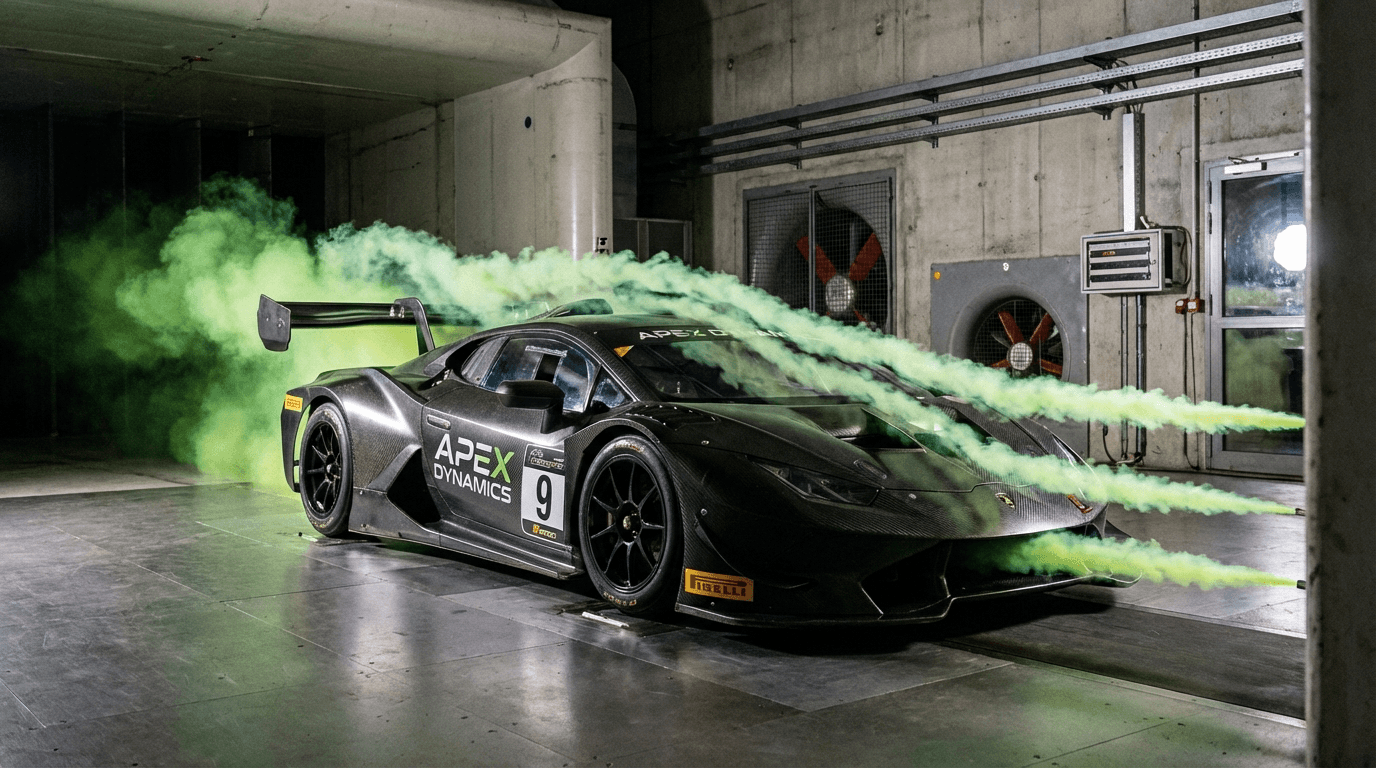
Aerodynamics is one of the most misunderstood areas of car modification. Bolt-on spoilers are everywhere, massive wings adorn cars that never see a track, and very few people understand whether their aero modifications are actually doing anything useful. The physics of aerodynamics is complex, but the practical application for car modification is straightforward once you understand the basics.
This guide explains how downforce and drag work, which aero components are functional versus cosmetic, and when aerodynamic modifications actually make a difference to performance.
The Two Forces: Downforce and Drag
Downforce
Downforce is a downward force created by air flowing over and under the car. It pushes the car into the ground, which increases the load on the tyres. More tyre load means more grip — more grip means faster cornering, better traction, and shorter braking distances.
Downforce works like adding weight to the car without actually adding mass. A car generating 200kg of downforce at speed has the grip equivalent of a car that weighs 200kg more — but without the inertial penalty of that extra mass.
Key point: Downforce increases with the square of speed. Double your speed and downforce quadruples. At 60 km/h, most aero modifications produce negligible downforce. At 120 km/h, the effect is noticeable. At 200+ km/h (track speeds), it dominates handling.
Drag
Drag is the resistance that air creates against the car's forward motion. Every car produces drag — the air has to move out of the way and flow around the car's shape. More drag means more resistance, which means more power needed to maintain speed and lower top speed.
The trade-off: Most devices that create downforce also create drag. A rear wing that pushes the car down at high speed also pushes against the car's forward motion. The goal of good aerodynamic design is to maximise downforce while minimising drag — the downforce-to-drag ratio.
Drag Coefficient (Cd) and Frontal Area
A car's total drag is determined by:
- Cd (drag coefficient) — How "slippery" the shape is. Lower is better. Modern sedans: 0.25-0.35. Sports cars: 0.28-0.38. Race cars: 0.30-0.50 (higher because of downforce devices).
- Frontal area — How large the car appears from the front. Larger cars push more air aside.
Aerodynamic Components Explained
Front Splitter
A flat, horizontal extension that protrudes forward from the bottom of the front bumper. It works by splitting the airflow — directing high-pressure air over the bumper and low-pressure air under the car.
How it creates downforce: The high-pressure air above the splitter and low-pressure air below creates a pressure differential that pushes the front of the car down.
Does it actually work? Yes — but only at significant speed (100+ km/h) and only if properly designed. A well-designed splitter on a car that sees track use provides measurable front-end grip improvement. On a street car at city speeds, the effect is minimal.
Price: RM 200 - RM 2,000 depending on material and fitment
For more on body kits and splitters, see our complete guide.
Rear Wing vs Rear Spoiler
These are often confused but work completely differently.
Rear Wing: A wing is an inverted aerofoil mounted above the car's boot/trunk on uprights. Air flows over and under the wing element, creating a pressure differential that pushes the rear of the car down. It works the same way an aeroplane wing works — but upside down to push down instead of lift up.
- Creates significant downforce at speed
- Also creates significant drag (the uprights and wing element resist forward motion)
- Most effective at 120+ km/h
- Can be adjustable (angle of attack changes downforce vs drag balance)
- Functional when properly designed
Rear Spoiler: A spoiler is a small lip or raised edge at the trailing edge of the boot. It works by disrupting (spoiling) the smooth airflow over the car's body, which reduces lift. Most cars generate rear lift at speed — the air flowing over the curved roofline creates low pressure above the rear of the car, trying to lift it. A spoiler breaks this flow and reduces (but does not eliminate) this lift.
- Reduces lift rather than actively creating downforce
- Creates minimal drag
- Effective even at moderate speeds (80-100+ km/h)
- Subtle but genuine aerodynamic benefit
- Functional, even small OEM spoilers
Key difference: A wing actively pushes the car down. A spoiler reduces how much the car wants to lift up. Both improve rear grip, but a wing is far more effective (and creates more drag).
Diffuser
A diffuser is an upward-angled panel at the rear underside of the car. It accelerates airflow exiting from under the car, which creates a low-pressure zone that sucks the car toward the ground.
How it works: As air flows under the car and enters the diffuser's expanding channels, it accelerates (Bernoulli's principle). Faster airflow = lower pressure = downforce. A well-designed diffuser can generate significant downforce with very little drag penalty.
Does it actually work? On a car with a flat or semi-flat undertray — yes, a diffuser can be very effective. On a car with exposed engine, exhaust, and suspension components underneath (most road cars), the turbulent airflow under the car reduces diffuser efficiency significantly.
For maximum diffuser effectiveness:
- The car needs a flat undertray (or at least a partially flat rear section)
- Ride height affects diffuser performance dramatically — lower is generally better
- Side skirts help seal airflow under the car
Price: RM 300 - RM 3,000
Canards (Dive Planes)
Small vertical or angled fins mounted on the front bumper corners. They redirect airflow to create a small amount of front downforce and help manage airflow around the front wheels.
Do they actually work? In isolation, the downforce from canards is very small. As part of a complete aero package (splitter + canards + side skirts + diffuser + wing), they contribute to overall aerodynamic balance. On a street car at city speeds, they are purely cosmetic.
Price: RM 100 - RM 600
Side Skirts
Panels that extend downward from the bottom of the doors, closing the gap between the car's body and the ground. Their aerodynamic function is to seal the sides of the car, preventing high-pressure air from flowing under the car and disrupting the low-pressure zone needed for underbody downforce and diffuser effectiveness.
Functional? As part of a complete aero package with a flat undertray, yes. On their own, the aero benefit is minimal. Most aftermarket side skirts are primarily aesthetic.
Vortex Generators
Small triangular fins mounted on the roof trailing edge (just before the rear window). They energise the boundary layer airflow to keep it attached to the car's surface longer, reducing turbulent wake behind the car.
Do they work? OEM vortex generators (like those on the Mitsubishi Evo X) do provide a measurable (small) reduction in drag and lift. Aftermarket stick-on vortex generators from eBay are largely cosmetic unless precisely positioned based on wind tunnel or CFD data.
When Aero Modifications Actually Matter
Speed Threshold
Aerodynamic forces scale with speed squared. At typical street speeds in Malaysia:
| Speed | Aero Effect |
|---|---|
| Under 80 km/h | Negligible — aero mods are purely cosmetic |
| 80-120 km/h | Minimal — some effect from spoilers and drag reduction |
| 120-160 km/h | Noticeable — wings and splitters start producing measurable downforce |
| 160-200 km/h | Significant — aero balance becomes important |
| 200+ km/h | Dominant — aero is the primary factor in cornering grip |
Track vs Street
On track: Aerodynamic modifications are highly valuable. Sustained high-speed cornering at 120-200+ km/h is where downforce dominates grip. Time attack cars, GT racers, and formula cars rely heavily on aerodynamics.
If you track your car, read our track day preparation guide — aero becomes part of your setup alongside mechanical grip.
On the street: Below 100 km/h, aerodynamic modifications provide virtually zero performance benefit. A street car's handling at legal speeds is dominated by mechanical grip (tyres, suspension, weight). Aero modifications on a street-only car are aesthetic choices, not performance ones.
Balance Matters
Adding a big rear wing without front downforce creates aerodynamic imbalance. At speed, the rear grips more than the front, which creates understeer. A widebody with wider front tyres can partially compensate, but proper aero balance requires front and rear downforce to be matched.
Front downforce devices: Splitter, front lip, canards Rear downforce devices: Wing, diffuser, spoiler Both: Undertray, side skirts, vortex generators
Functional Aero on a Budget
If you track your car and want meaningful aerodynamic improvement without massive expense:
- OEM spoiler or lip spoiler (RM 200-600) — Reduces rear lift with minimal drag
- Front splitter (RM 300-1,000) — Front downforce at speed
- Partial undertray (RM 200-500) — Smooths underbody airflow
- Side skirt extensions (RM 200-600) — Seals underbody
- Adjustable rear wing (RM 1,500-5,000) — Serious rear downforce for track
FAQ
Does a rear wing on a FWD car do anything?
Yes — a rear wing on a front-wheel-drive car adds rear grip, which reduces the tendency for the rear to step out under braking and cornering. This can improve stability and confidence. However, adding rear downforce without balancing the front can increase understeer.
Are bolt-on aero parts from eBay functional?
Most cheap universal aero parts are not designed with aerodynamic principles. They may look like a splitter or diffuser but are not shaped correctly to produce downforce. For functional aero, buy from brands that publish CFD (Computational Fluid Dynamics) data or wind tunnel results, or at minimum, buy car-specific parts designed by companies with motorsport experience.
Does lowering my car improve aerodynamics?
Yes. A lower car reduces the gap between the body and the ground, which reduces underbody airflow and lift. It also improves splitter and diffuser effectiveness. This is one reason race cars run as low as physically possible.
Will a big wing slow my car down?
A large wing creates significant drag. On a long straight, a big wing can cost 5-15 km/h of top speed compared to no wing. On a track with many corners, the cornering speed gained through downforce more than compensates for the straight-line loss — lap times improve. On a straight-line-only car (drag racing), a wing is counterproductive.